

 Image 1 of 1
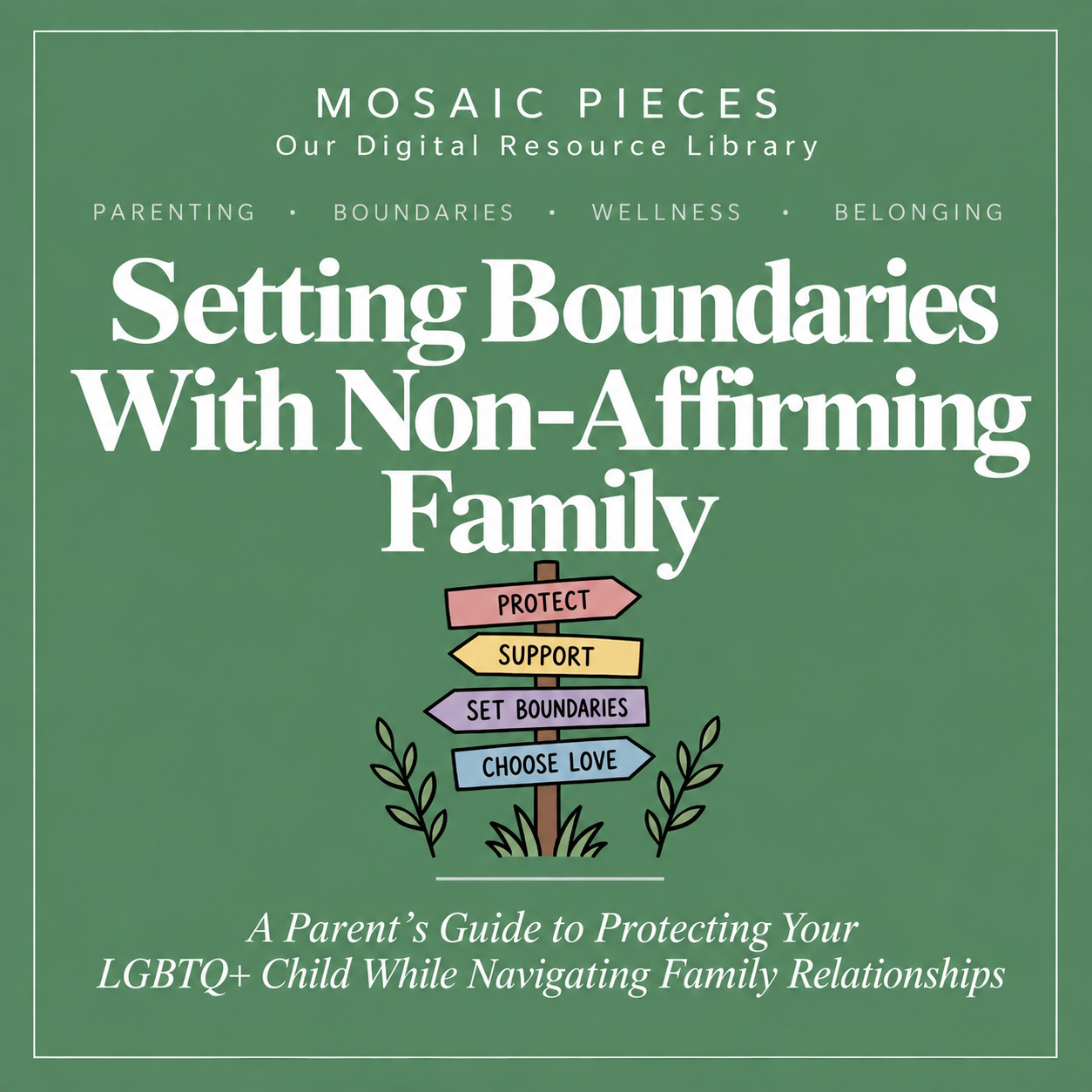
A Parent’s Guide to Protecting Your LGBTQ+ Child While Navigating Family Relationships
What happens when you affirm your LGBTQ+ child—but Grandma, Grandpa, an aunt, uncle, sibling, or other relative doesn't?
You may love your extended family deeply while also knowing that your child should never have to tolerate shame, disrespect, misgendering, religious condemnation, or rejection just to keep the family together.
This practical guide from the Mosaic Pieces Digital Resource Library helps parents set clear, compassionate boundaries without making their child responsible for keeping the peace.
Inside this 26-page printable guide, parents will find guidance for:
Deciding what is—and isn't—negotiable
Separating another person's beliefs from their behavior
Talking with your child before setting boundaries
Setting boundaries that are specific and enforceable
Handling names and pronouns
Responding to religious comments and Scripture used against your child
Navigating grandparents and other close relatives
Holidays and family gatherings
Partners, weddings, and family events
Social media, privacy, and outing
Relatives who try to go around the parents
Responding when you're blamed for affirming your child
“You're dividing the family” accusations
Deciding when to limit or pause contact
Thinking carefully about no-contact
Leaving room for reconciliation without removing the boundary
Recognizing meaningful apologies and changed behavior
Supporting siblings and cousins
A Scripture lens for Christian families
Ready-to-use boundary scripts
A printable Family Boundary Plan
A Before the Next Family Gathering checklist
The guide doesn't ask parents to control what every relative believes.
It helps them decide what behavior their child will no longer be expected to endure.
Your child should never have to wonder whether you will protect them in order to keep everyone else happy.
DIGITAL DOWNLOAD
26-page printable PDF • No physical product will be shipped.
Published by Mosaic Pieces — Our Digital Resource Library.
A Parent’s Guide to Protecting Your LGBTQ+ Child While Navigating Family Relationships
What happens when you affirm your LGBTQ+ child—but Grandma, Grandpa, an aunt, uncle, sibling, or other relative doesn't?
You may love your extended family deeply while also knowing that your child should never have to tolerate shame, disrespect, misgendering, religious condemnation, or rejection just to keep the family together.
This practical guide from the Mosaic Pieces Digital Resource Library helps parents set clear, compassionate boundaries without making their child responsible for keeping the peace.
Inside this 26-page printable guide, parents will find guidance for:
Deciding what is—and isn't—negotiable
Separating another person's beliefs from their behavior
Talking with your child before setting boundaries
Setting boundaries that are specific and enforceable
Handling names and pronouns
Responding to religious comments and Scripture used against your child
Navigating grandparents and other close relatives
Holidays and family gatherings
Partners, weddings, and family events
Social media, privacy, and outing
Relatives who try to go around the parents
Responding when you're blamed for affirming your child
“You're dividing the family” accusations
Deciding when to limit or pause contact
Thinking carefully about no-contact
Leaving room for reconciliation without removing the boundary
Recognizing meaningful apologies and changed behavior
Supporting siblings and cousins
A Scripture lens for Christian families
Ready-to-use boundary scripts
A printable Family Boundary Plan
A Before the Next Family Gathering checklist
The guide doesn't ask parents to control what every relative believes.
It helps them decide what behavior their child will no longer be expected to endure.
Your child should never have to wonder whether you will protect them in order to keep everyone else happy.
DIGITAL DOWNLOAD
26-page printable PDF • No physical product will be shipped.
Published by Mosaic Pieces — Our Digital Resource Library.